
I wanted to share two charts from Fundstrat, one of our research partners, and some perspective on the recent market pullback and election uncertainty.
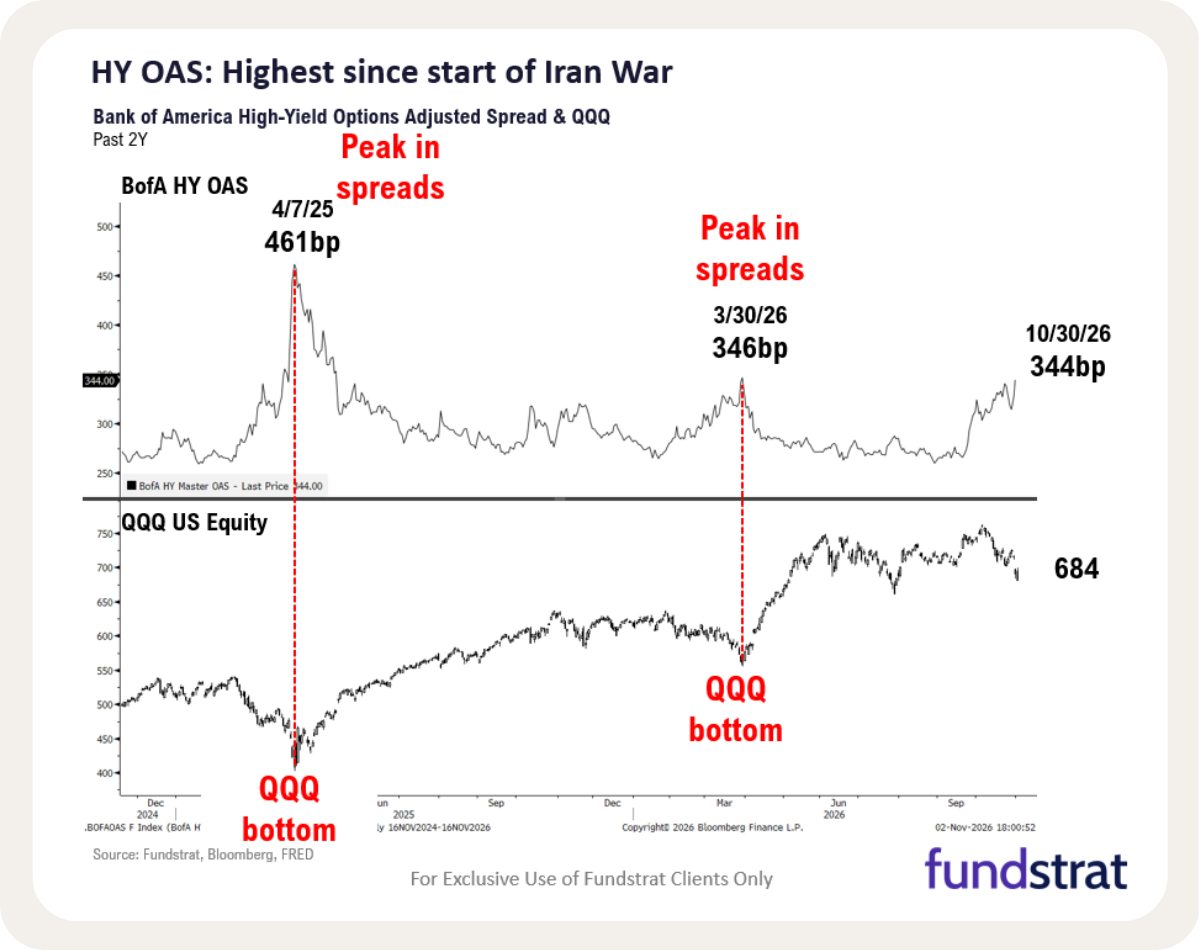
The first chart shows credit spreads. Companies borrow money by issuing bonds, and investors earn interest for lending to them. Because lending to a company carries more risk than lending to the U.S. government, investors generally want a higher interest rate.
That extra interest is the “spread.” If a government bond pays 4% and a company’s bond pays 7%, the spread is 3 percentage points. When investors get more concerned about being repaid, they demand more interest, and spreads rise. When those concerns ease, spreads fall. Think of it as a way to measure how nervous investors are feeling.
The bottom line represents the Nasdaq-100, which includes many of the largest technology and growth companies. Notice the two highlighted periods: credit spreads peaked around the same time the Nasdaq-100 bottomed, followed by a recovery in stocks.
Spreads have moved higher again. What we’d like to see is for them to peak and start coming down. That would suggest concerns are easing and would be an encouraging sign for stocks and other risk assets.
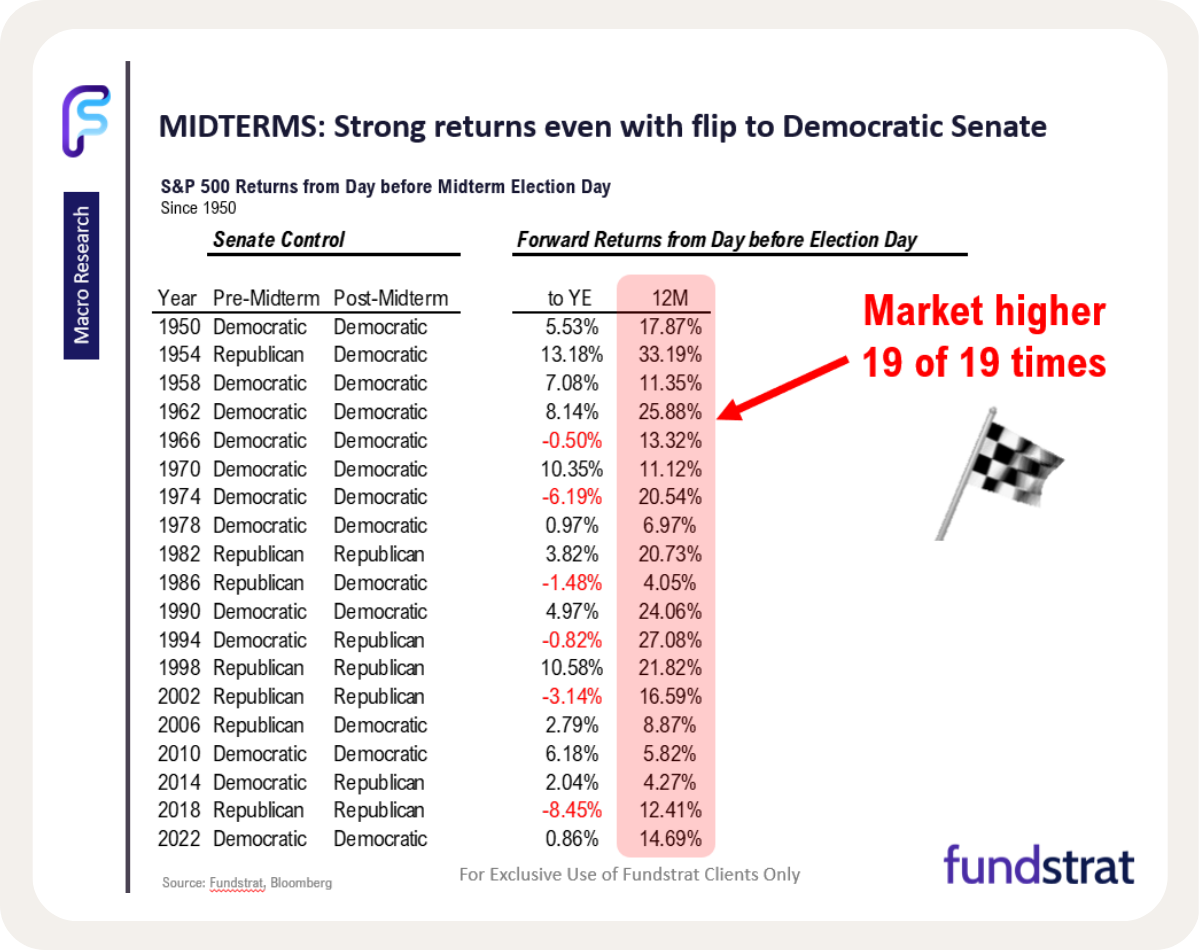
The second chart puts political uncertainty into perspective. Since 1950, the S&P 500 was higher 12 months after midterm elections 19 out of 19 times, measured from the day before the election. Returns through year-end were positive in most cases, and gains over the following 12 months were often substantial.
That includes all midterms, with different outcomes for Senate control—including flips to Democrats. Changes in political control haven’t prevented markets from moving higher.
None of us can predict exactly how today’s uncertainty will play out. What we can do is look back at the numbers. History doesn’t guarantee what happens next, but it gives us some confidence and a reason to keep things in perspective as we move forward.
As always, process over predictions.
Shean