
New Peace Deal Framework and What It Means
The U.S. and Iran recently announced a preliminary agreement aiming to end the four-month conflict that has weighed on the global economy. Markets reacted positively to the news, with stocks moving higher, oil prices falling, and interest rates declining.

While the announcement is encouraging, plenty of details still need to be ironed out. The agreement would reopen the Strait of Hormuz and kick off a 60-day window to negotiate a final deal. However, major structural issues—including Iran's nuclear program and economic sanctions—remain on the table.
It is important to keep these developments in perspective. We have seen several ceasefire announcements and negotiation efforts since this conflict began.
Many led to short-term market swings, but failed to produce a lasting resolution. This latest agreement is a positive step, but it comes at a time when markets were already trending higher and the broader economy has remained resilient. As always, staying focused on your long-term plan matters far more than reacting to the latest headlines.
The Energy Equation and Inflation
Energy prices have been the primary channel through which this conflict has impacted the economy. The closure of the Strait of Hormuz disrupted oil shipments and pushed prices up. However, oil had already been adjusting before the recent peace announcement, falling from a peak of $118 per barrel in April to around $85—a decline of roughly 28%.
Historically, geopolitical conflicts in the Middle East can cause temporary spikes in oil, but long-term prices are driven by supply and demand fundamentals. Reopening the Strait of Hormuz is an important step toward easing energy pressures, even if it takes time for prices to fully normalize.
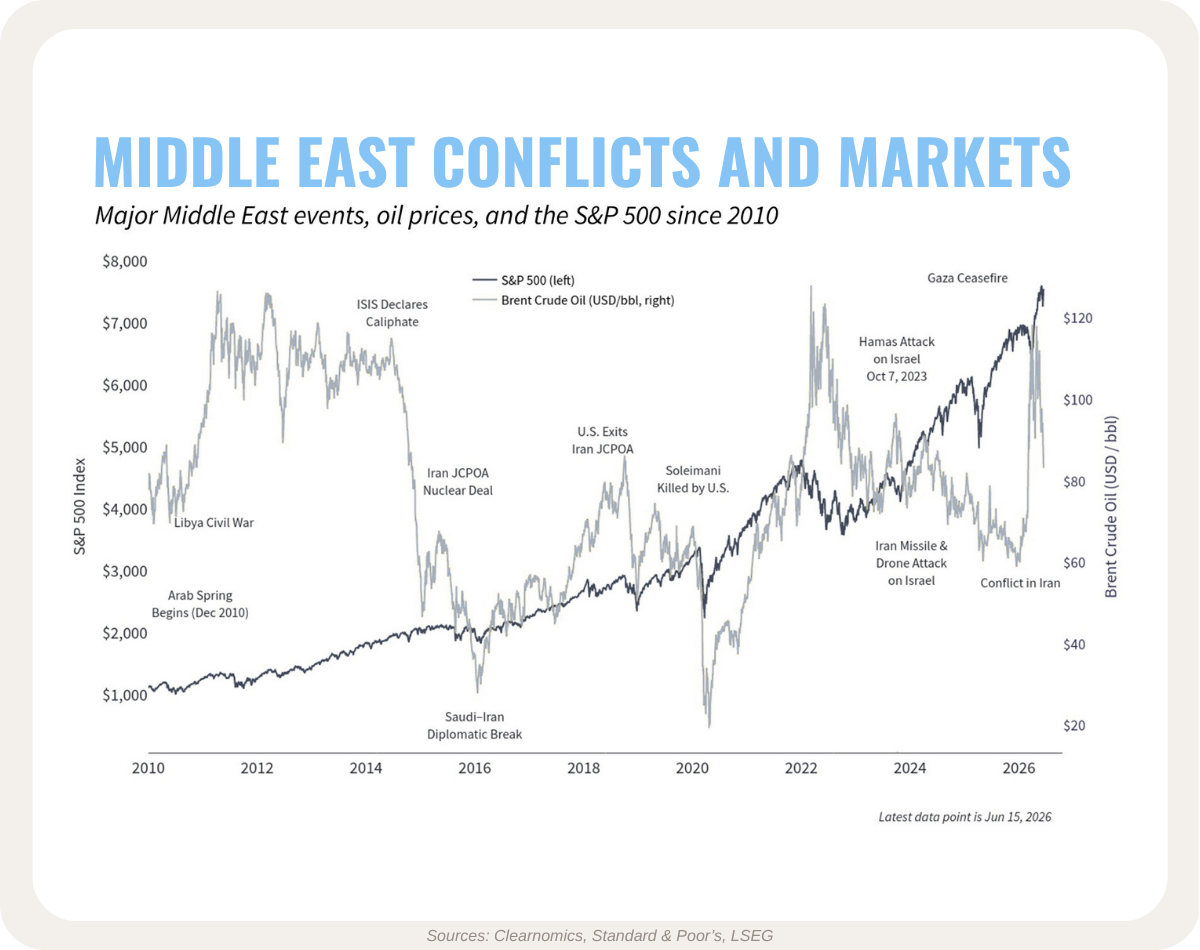
Gas prices have followed a similar pattern, rising above $4.50 per gallon before recently pulling back closer to $4.00.
While higher energy costs have pushed headline inflation numbers up, the underlying data shows that inflation outside of food and energy has remained much more contained. If oil prices continue to stabilize, it should ease overall inflation pressures and give the Fed more flexibility in the months ahead.
Broad Market Resilience
Beyond energy, markets have held up well this year. U.S. stocks have posted strong single-digit gains, supported by solid earnings growth and a resilient economy. Bonds have also served their purpose, steadying portfolios during periods of volatility even though total returns have been relatively flat for the year. International stocks have continued to perform well, building on the strength we’ve seen over the past couple of years.
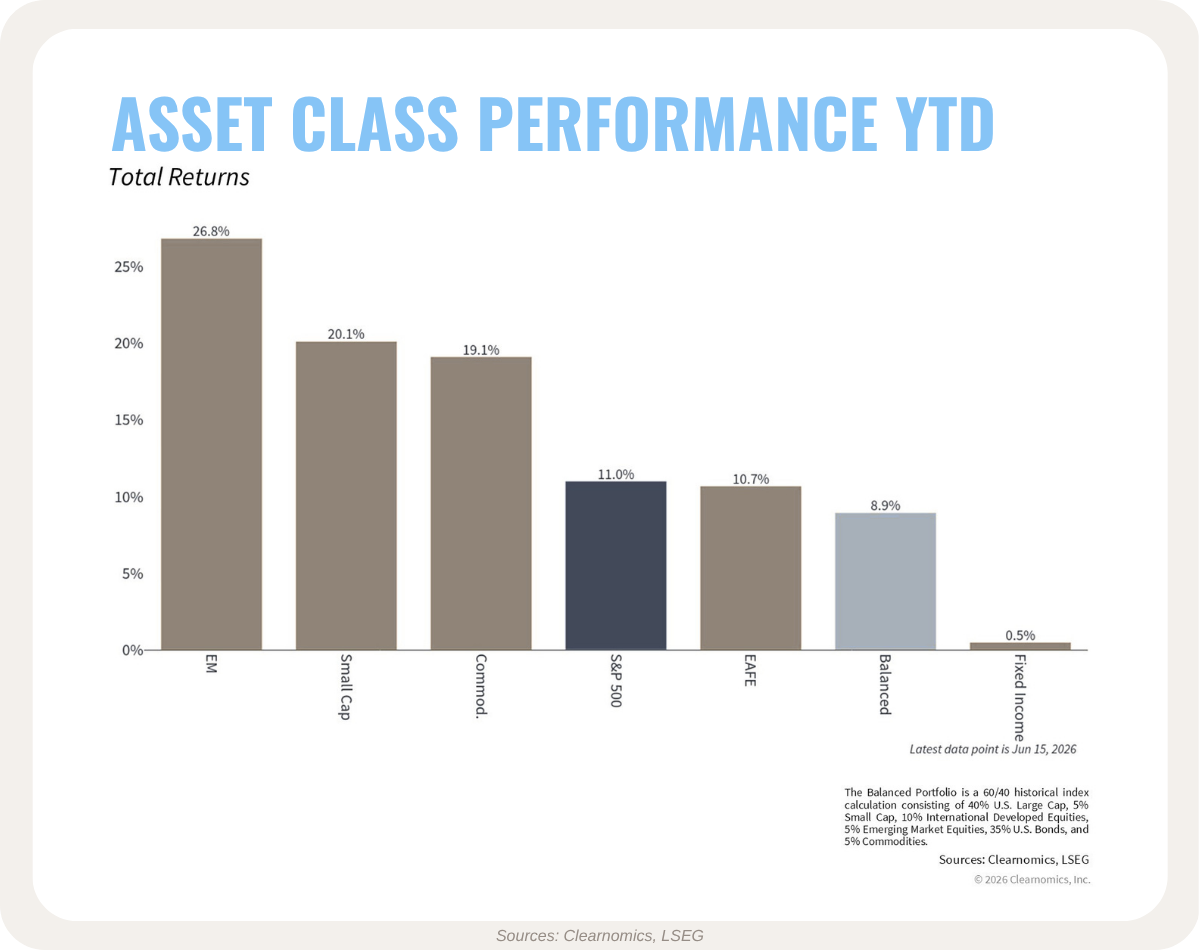
We have seen contribution from several different market segments. Energy led the way early as higher oil prices boosted sector revenues, while defensive areas like Utilities and Consumer Staples have held up well. Technology has experienced some swings as interest rates moved, but the sector remains positive for the year.
This is a good reminder of why balance matters. Geopolitics, inflation, and interest rates are fundamentally unpredictable. Owning a mix of investments across different parts of the market helps manage risk while ensuring you participate in opportunities for growth.
Perspective Over Predictions
History offers an important viewpoint during times like these.
Over the past century, markets have weathered wars, oil shocks, and countless geopolitical crises. While these events regularly create short-term volatility, markets have historically recovered and moved higher over time. Looking back, long-term performance has been driven far more by economic growth and business fundamentals than by any single geopolitical event.
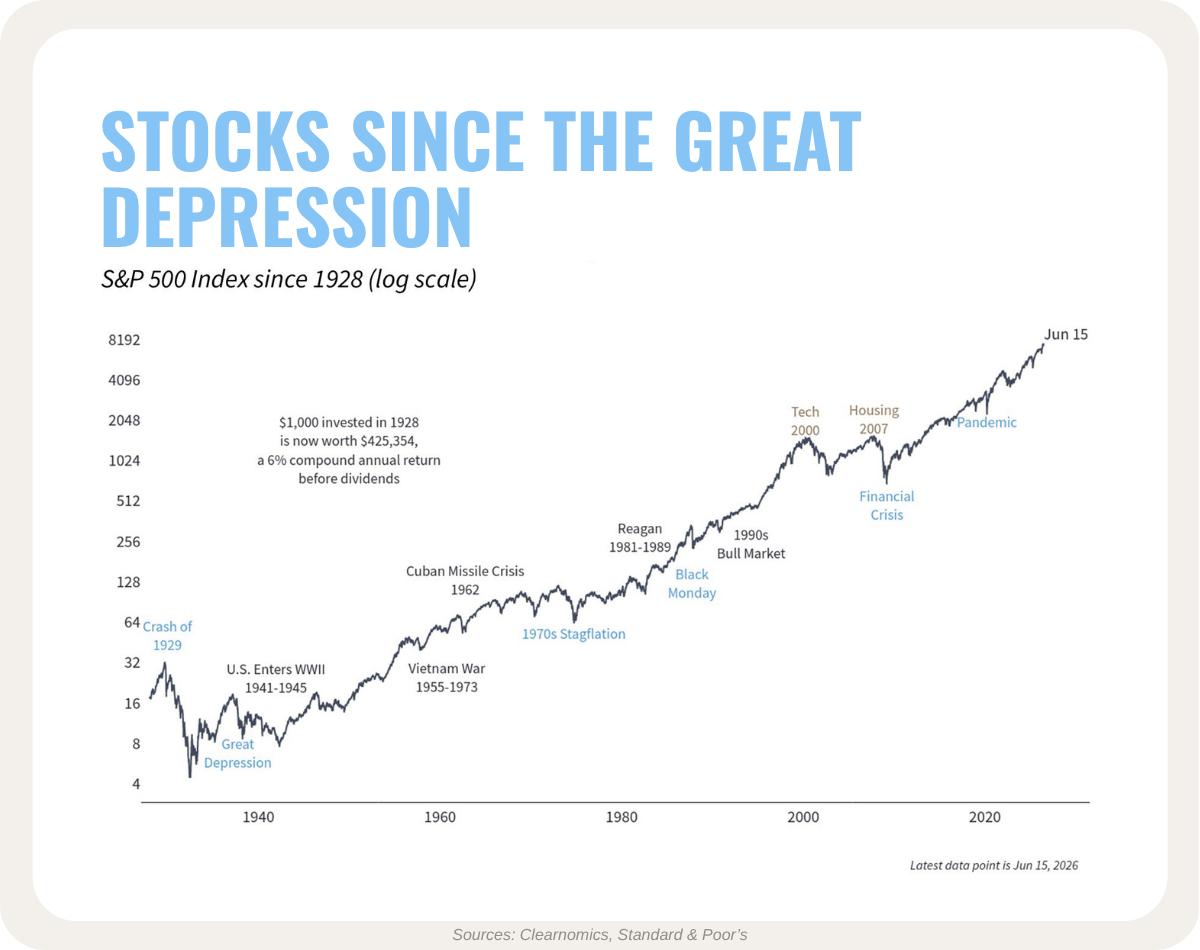
The recent agreement is certainly a positive development. At the same time, a well-diversified portfolio isn't built around the outcome of any one event. If lower energy prices continue, they will help ease inflation, put money back in consumers' pockets, and reduce costs for businesses—all of which supports real economic growth.
Process over predictions.
Talk soon!
Shean