
The Lost Decade Pt.1—A Quick Look Back: What Made the 2000s So Painful?
Welcome to our 5-part blog series on “The Lost Decade”—a period when the S&P 500 went ten long years without delivering real gains.
These blogs explore the key lessons this challenging chapter in market history can teach us, and share practical strategies to help you safeguard your investments if, or when, another period like this comes around.

Imagine having $100 invested in the S&P 500 at the end of the year 2000. By the end of 2011, after two brutal crashes and a drawn-out recovery, that investment would’ve ended up worth around….$100. Hence the “lost” part. Here’s how it unfolded:
2000–2002: The Dot-Com Crash
The 1990s tech boom drove stocks to dizzying heights, but by early 2000, the bubble burst. Then came the 9/11 attacks, which added to the market’s panic. By late 2002, the S&P 500 had fallen about 40%. Investors—especially retirees—watched their accounts shrink dramatically.
2003–2007: A Recovery With a False Sense of Security
Markets rebounded from 2003, boosted by low interest rates and steady economic growth. By 2007, the S&P 500 had climbed back to its previous highs. Optimism returned—but under the surface, trouble was brewing in the credit and housing markets.
2008–2009: The Financial Crisis
Then came the crash. In 2008 alone, the S&P 500 dropped nearly 40%. By early 2009, it was down more than 50% from its 2007 peak. It was the worst market decline since the Great Depression. For retirees drawing income, this wasn’t just a rough ride—it was potentially portfolio-threatening.
2009–2011: The Climb Back Begins
The market bounced in 2009 and 2010, gaining over 40% in those two years combined. But even by the end of 2011, stocks were still only back to their late-1990s levels. Thirteen years with no real net gain. That’s why this era is remembered as a “lost” decade for long-term investors.
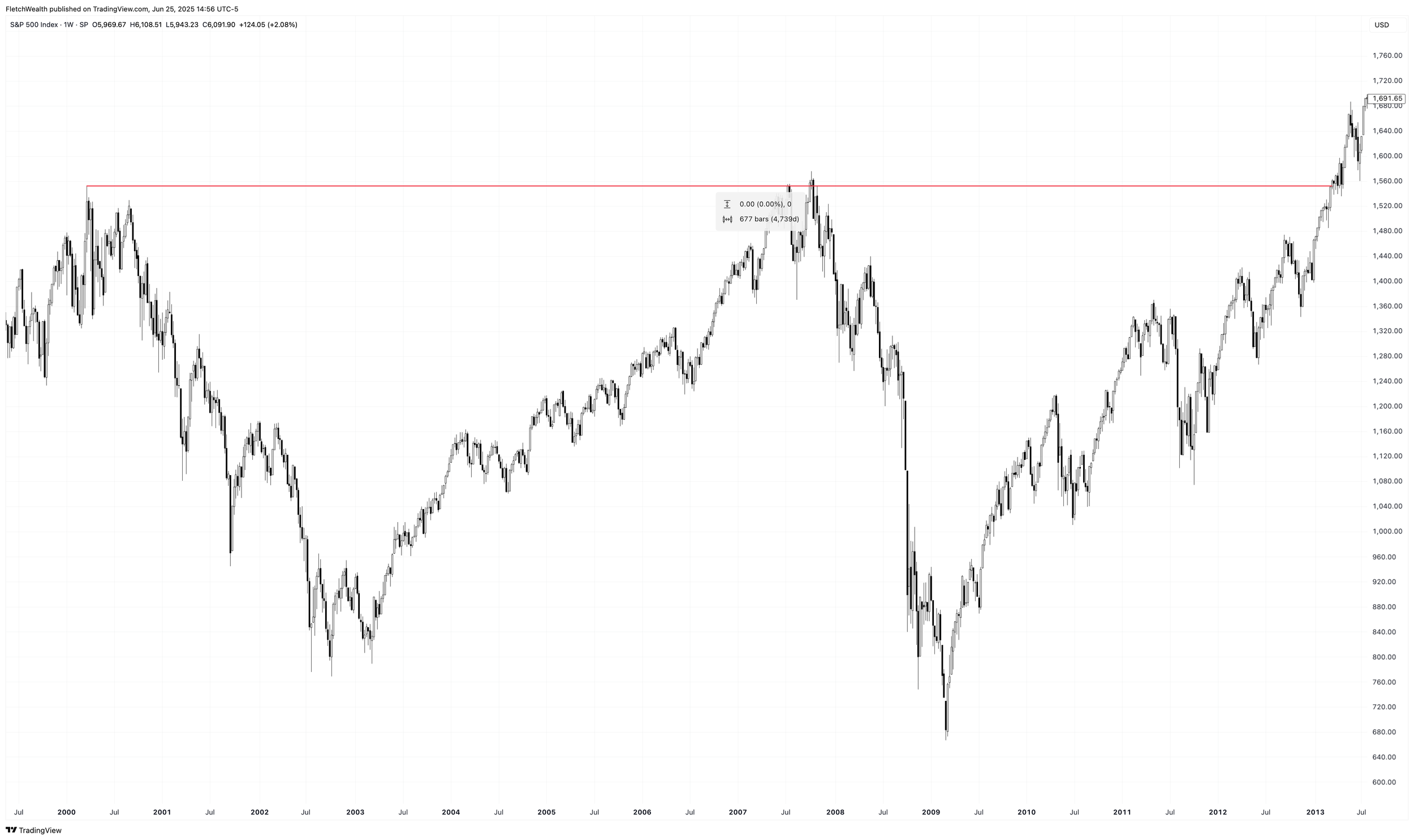
This is a chart of the S&P 500 from Monday, March 20th, 2000 to Monday, March 11th, 2013 showing how it went 4,739 days with no market gains.
Why It Mattered So Much for Retirees
The sequence of returns in retirement really matters. If you're withdrawing from your portfolio and the market drops early in your retirement, the impact can be much more severe than if the same losses happen later. Unfortunately, the 2000s were a textbook example of bad timing for new retirees.
Many had to sell assets at lower prices to fund their spending. For some, this meant permanent losses. For others, it led to anxiety and reactive decision-making—like getting out of the market at the worst possible time.
What Can We Take Away From All This?
Diversification matters: A portfolio that included bonds, international stocks, or alternatives likely fared better.
Sequence of returns risk is real: Retirees need a withdrawal strategy that accounts for bad market timing. We spend a lot of time building Five-Year Income Plans to reduce this risk as much as possible.
Behavior matters more than you think: Staying invested through a downturn is hard, but critical.
Having a plan beats reacting: A thoughtful plan, with buffers for market volatility, can keep retirees on track even during rough stretches.
The Lost Decade was a painful chapter for many investors. But for those willing to learn from it, it also offers some of the most valuable lessons about risk, resilience, and staying the course.
Process over predictions.
Shean