
The Lost Decade Pt.2—Impact on Retirees: Withdrawing During a Downturn
Welcome to our 5-part blog series on “The Lost Decade”—a period when the S&P 500 went ten long years without delivering real gains.
These blogs explore the key lessons this challenging chapter in market history can teach us, and share practical strategies to help you safeguard your investments if, or when, another period like this comes around.

If you were drawing from your portfolio during the early 2000s, you may have faced a very real challenge: sequence of returns risk. It’s the idea that poor market returns early in retirement—not later—can seriously affect how long your money lasts.
The so-called “Lost Decade” gave us a painful example of how that plays out. Imagine someone who was 55 in the year 2000 and planning to retire at 65 in 2010. After ten full years, their portfolio probably grew very little, if at all, outside what they added; virtually no compounding took place. That’s a full decade with no forward progress—possibly pushing retirement back or forcing lifestyle changes.
So why is this risk so damaging?
When you’re taking withdrawals during a flat or down market, you’re pulling from a portfolio that isn’t getting a chance to recover. Instead of riding out the storm, you’re draining the lifeboat while the waves are still crashing. And the order in which returns happen—especially in those early years—matters a lot.
Here’s an example:
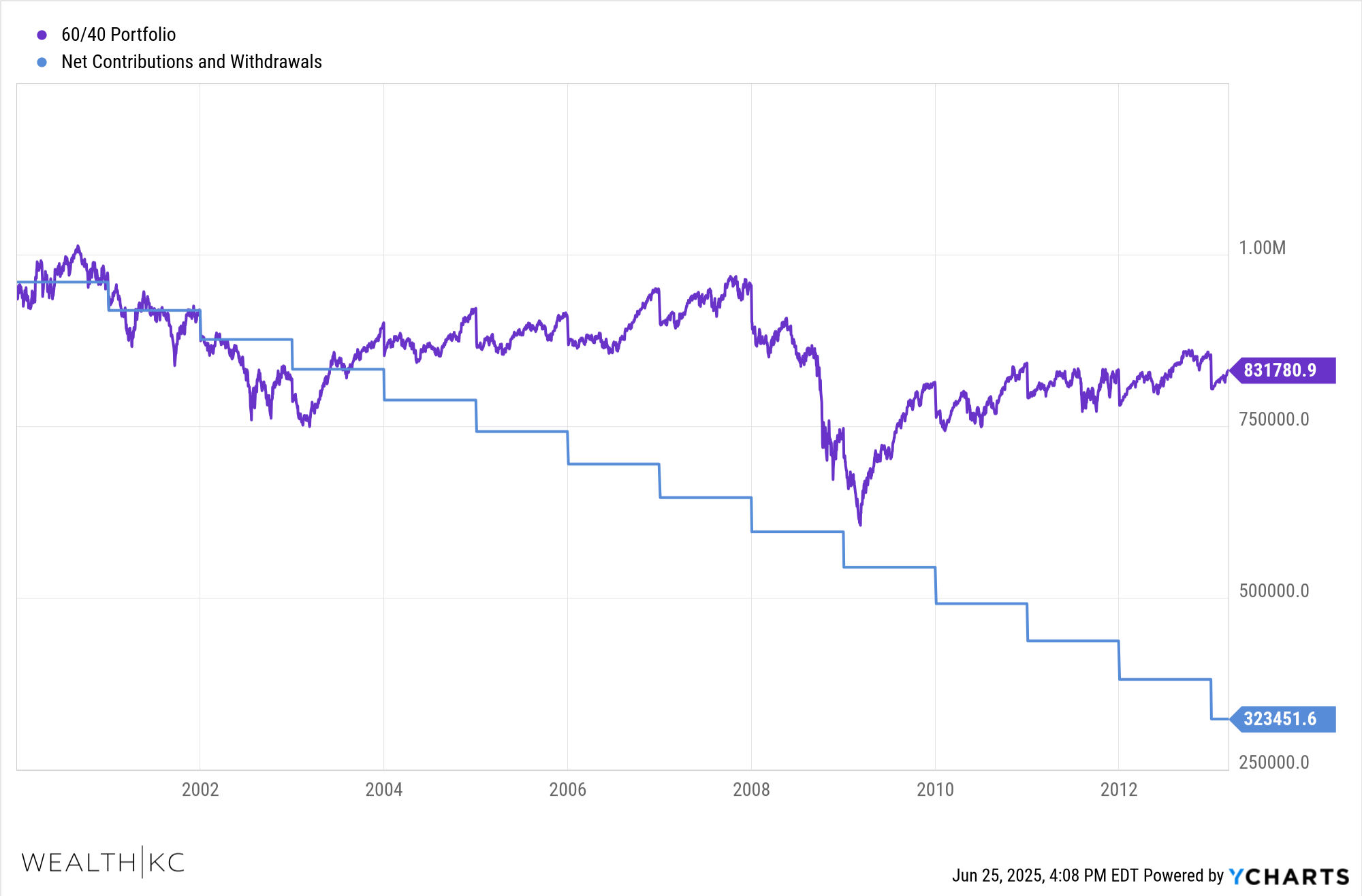
This chart shows a $1,000,000 portfolio over the “Lost Decade”. Suppose you started by withdrawing 4% ($40,000) and raised that by 2.85% each year for inflation. Over 13 years, you withdrew $676,548, and the portfolio still had $831,780 left. (No fees shown; for example only.)
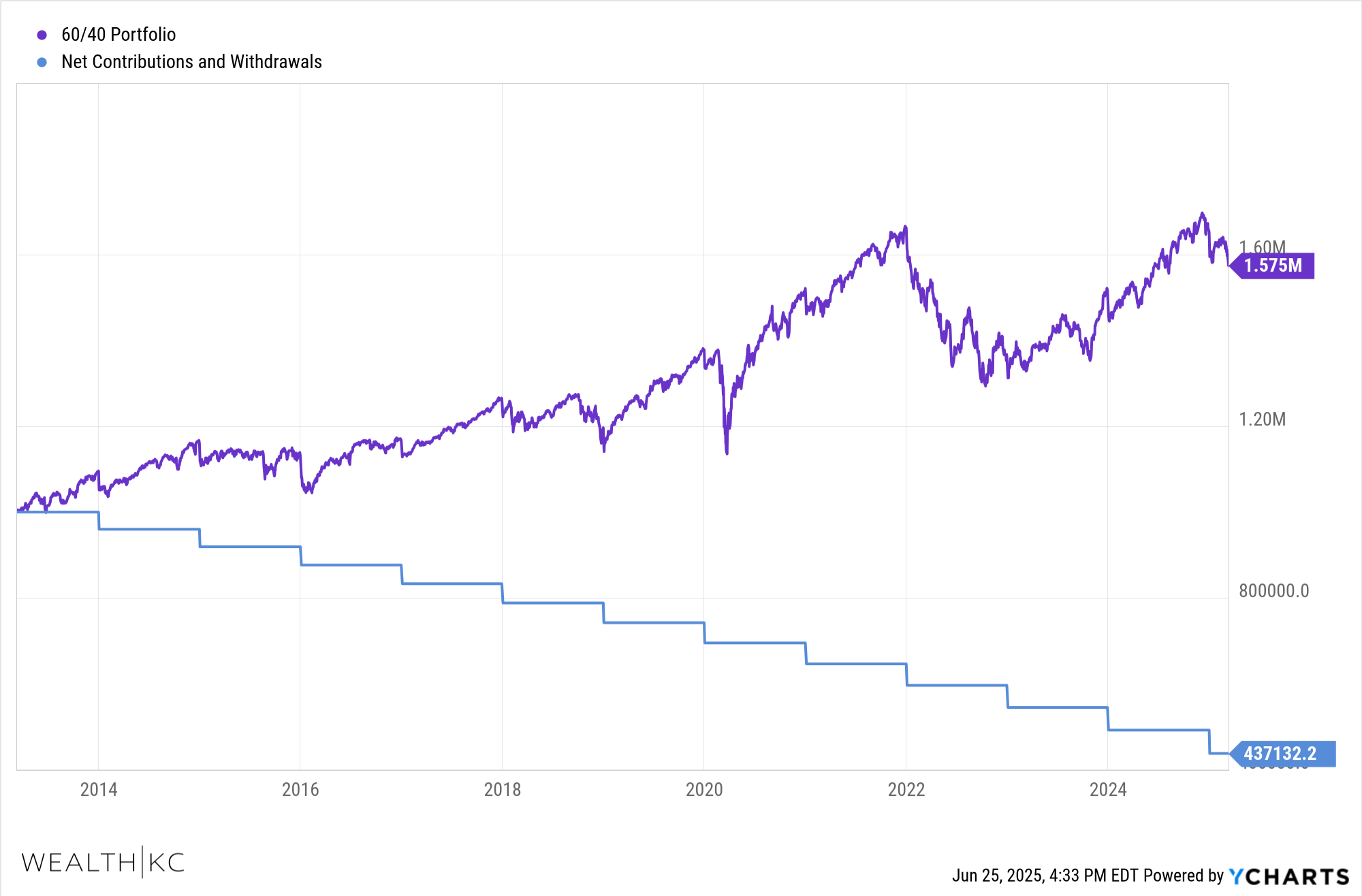
Now, imagine you had withdrawn the same amounts as above, but you retired at the end of the “Lost Decade.” Over the next 12 years until March of this year (2025), total withdrawals would be similar at $562,867 (slightly less than above due to the shorter time frame), but you would have nearly DOUBLE the remaining amount—$1,575,000. Think about it—two people with identical careers, salaries, savings rates, and everything else—the only difference being the year they were born and the different outcomes they would have in their retirement and family legacy.
Retiring into a prolonged downturn can damage your portfolio. Being prepared for sequence of return risk is critical, but more so, having a larger nest egg and being prepared to have your retirement income adjust year in and year out are important steps in creating the smoothest retirement possible. Most importantly, creating a plan and portfolio strategy for this is critical to try to avoid it. We’ll cover a few of those in Part 5.
Process over predictions.
Shean